Professor David Cram
PhD in Microbiology from Monash University in Australia, former Head of the Department of Reproductive Medicine and Genetics at Monash University in Australia, and a member of his research group, Professor Cram has co-parented the third baby in the world through in vitro fertilization, and is an expert in the field of stem cells. Professor Cram is an internationally renowned reproductive geneticist and molecular diagnostician in assisted reproductive technology, with over thirty years of deep research in the clinical application of pre-embryonic genetic testing (PGT/PGD), genetic diagnosis in assisted reproductive technology, non-invasive prenatal testing (NIPT), and next-generation sequencing technology in reproductive medicine, and is one of the important推动ers of the early technical system establishment and continuous evolution in this field.
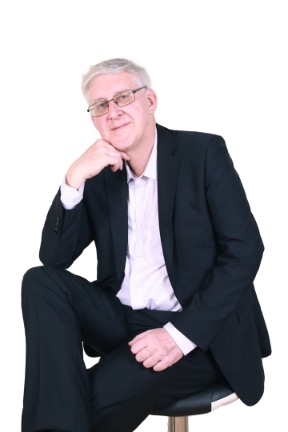
Personal experience is as follows:
Monash IVF Director of Pre-implantation Genetic Diagnosis (1998-2008)
Berry and Con Biotech, Chief Scientists of China A-share Listed Company (2013-2021)
President of the International Society for Preimplantation Genetic Diagnosis (ISPGD) (2020-2021).
Selected into the 2014 National "Thousand Talents Plan" for Foreign Experts in China, and享受 the Special Government Allowance of the State Council of China.
Published more than 150 peer-reviewed research papers in the world's top academic journals, with an impact factor of over 800 and more than 4000 citations.
Famous publications (but not limited to):
1. Cram DS#, Sherf, BA, Libby RT, Mattaliano RJ, Ramachandran KL, Reeve JN. Structure and expression of the genes, mcrBDCGA, which encode the subunits of component C of methyl coenzyme M reductase in Methanococcus vannielii. Proceedings of the National Academy of Sciences USA, 1987; 84:3992-3996.
2. Cram DS#, Fisicaro N, Coppel RL, Whittingham S, Harrison LC. Mapping of multiple B cell epitopes on the 70-kilodalton autoantigen of the U1 ribonucleoprotein complex. Journal of Immunology, 1990; 145:630-635.
3. Cram DS#, Song B, Trounson AO. Genotyping of Rhesus SCNT pluripotent stem cell lines. Nature, 2007; 450:E12-14.
4. Wang L, Cram DS#, Shen J, Wang X, Zhang J, Song Z, Xu G, Li N, Fan J, Wang S, Luo Y, Wang J, Yu L, Liu J, Yao Y. Validation of copy number variation sequencing for detecting chromosome imbalances in preimplantation embryos. Biology of Reproduction, 2014; 91:37.
5. Cram DS#, Leigh D, Handyside A, Rechitsky L, Xu K, Harton G, Rubio C, Fragouli E, Kahraman S, Forman E, Katz-Jaffe M, Tempest H, THornhill A, Strom C, Escudero T, Qiao J, Munne S, SimpsonJL, Kuliev A. PGDIS position statement on the transfer of mosaic embryos 2019. Reproductive BioMedicine Online, 2019:39 Suppl 1:e1-e4.
6. Katz-Jaffe GM, Mantzaris D, Cram DS#. DNA identification of fetal cells in cervical mucus: potential for non-invasive prenatal diagnosis. British Journal of Obstetrics and Gynaecology, 2005; 112:595-600.
7. Niclis J, Trounson AO, Dottori M, Ellisdon A, Bottomley S, Verlinsky Y, Cram DS#. Human embryonic stem cell models of Huntington’s Disease. Reproductive Biomedicine Online, 2009; 19:106-113.
8. Lyrawati D, Trounson A, Cram DS#. Expression of GFP in the mitochondrial compartment using DQAsome-mediated delivery of an artificial mini-mitochondrial genome. Pharmaceutical Research, 2011; 28:2848-2862.
9. Niclis JC, Pinar A, Haynes JN, Alsanie W, Jenny R, Dottori M, Cram DS#. Characterization of forebrain neurons from late-onset Huntington’s Disease human embryonic stem cell lines. Frontiers of Cell Neuroscience, 2013; 7:37.
10. Liang D, Peng Y, Lv W, Deng L, Zhang Y, Li H, Yang P, Zhang J, Song Z, Xu G, Cram DS#, Wu L. Copy number variation sequencing for comprehensive diagnosis of human chromosome disease syndromes. Journal of Molecular Diagnosis, 2014; 16:519-526.
11. Song Y, Huang S, Zhou X, Jiang Y, Qi Q, Bian X, Zhang J, Yan Y, Cram DS#, Liu J. Non-invasive prenatal testing for fetal aneuploidies in the first trimester of pregnancy. Ultrasound in Obstetrics and Gynecology, 2015; 45:55-60.
12. Lv W, Wei X, Guo R, Liu Q, Zheng Y, Chang J, Bai T, Li H, Zhang J, Song Z, Cram DS#, Liang D, Wu L. Non-invasive prenatal testing for Wilson Disease using circulating Single Molecule Amplification and Re-sequencing Technology (cSMART). Clinical Chemistry, 2015; 61:172-181.
13. Fan J, Wang L, Wang H, Ma M, Wang S, Liu Z, Xu G, Zhang J, Cram DS#, Yao Y. The clinical utility of next generation sequencing for identifying chromosome disease syndromes in human embryos. Reproductive Biomedicine Online, 2015; 31:62-70.
14. Li N, Wang L, Wang H, Ma M, Wang X. Li Y, Wang S, Zhang W, Zhang J, Cram DS#, Yao Y. The performance of whole genome amplification methods and next generation sequencing for pre-implantation genetic diagnosis of chromosomal abnormalities. Journal of Genetics and Genomics, 2015; 42:151-159.
15. Zhang S, Xia B, Jiang H, Wang L, Xu R, Shi Y, Zhang J, Xu M, Cram DS#, Ma S. Comprehensive profiling of oncogenic mutations in non small cell lung carcinoma using single molecule amplification and re-sequencing technology. Oncotarget, 2016; 7: 50477-50489.
16. Han M, Li Z, Wang W, Huang S, Lu Y, Gao Z, Wang L, Kang D, Li L, Xu M, Cram DS#, Dai P. Performance of a quantitative assay for noninvasive prenatal diagnosis of autosomal recessive hearing loss caused by GJB2 and SLC26A4 mutations. Genetics in Medicine, 2017; 19:1306-1316.
17. Wang J, Chen L, Zhou C, Wang L, Xie H, Xiao Y, Zhu H, Hu T, Zhang Z, Zhu Q, liu Z, Liu S, Wang He, Xu M, Ren Z, Yu F, Cram DS#, Liu H. Prospective chromosome analysis of 3429 amniocentesis samples in China using copy number variation sequencing. American Journal of Obstetrics and Gynecology, 2018; 219:287.e1-287.e18.
18. Wang Z, Cheng G, Han X, Mu X, Zhang Y, Cui D, Liu C, Zhang L, Fan Z, Ma L, Di J, Cram DS#, Shi Y, Liu D. Application of single molecule amplification and re-sequencing technology for broad surveillance of oncogenic mutations in plasma from patients with advanced lung adenocarcinoma. Journal of Molecular Diagnostics, 2017; 19:169-181.
19. Xu L, Mao A, Zhang J, Liu H, Gui B, Choy KW, Huang H, Yu Q, Zhang X, Chen M, Lin N, Chen L, Han J, Wang Y, Zhang M, Li X, He D, Lin Y, Zhang J, Cram DS#, Cao H. Long-molecule sequencing: A new approach for identification of clinically significant DNA variants in alpha and beta-thalassemia carriers. Journal of Molecular Diagnostics, 2020; 22:1087-1095.
20. Liang Q, Gu W, Chen P, Li Y, Liu Y, Tian M, Zhou Q, Qi H, Zhang Y, He J, Li Q, Qin L, Tang J, Teng Y, Zhou Y, Huang S, Lu Z, Xu M, Cram DS#, Wu L. A more universal approach to comprehensive analysis of thalassemia alleles (CATSA). Journal of Molecular Diagnostics, 2021, 23:448-457.
21. Cheng Y, Yu Q, Ma M, Wang H, Tian S, Zhang W, Zhang J, Liu Y, Pan X, Yang Q, Liang H, Wang Li, Leigh D, Cram DS#, Yao Y. Variant haplophasing by long read sequencing: a new approach for PGT workups. Fertility and Sterility, 2021,116:774-783.
22. Shi P, Wang C, Liang H, Zhu X, Wang X, Ning Y, Leigh D, Cram DS#, Kong X. The hidden causes of pregnancy loss: a closer look. Journal of Translational Medicine, 2025, 23:656.
23. Shi P, Liang H, Hou Y, Chen D, Ren H, Wang C, Xia Y, Zhang D, Leigh D, Cram DS, Kong X. The uncertainty of copy number variants: pregnancy decisions and clinical follow up. American Journal of Obstetrics and Gynecology 2023, 229: 170.e1-170.e8.